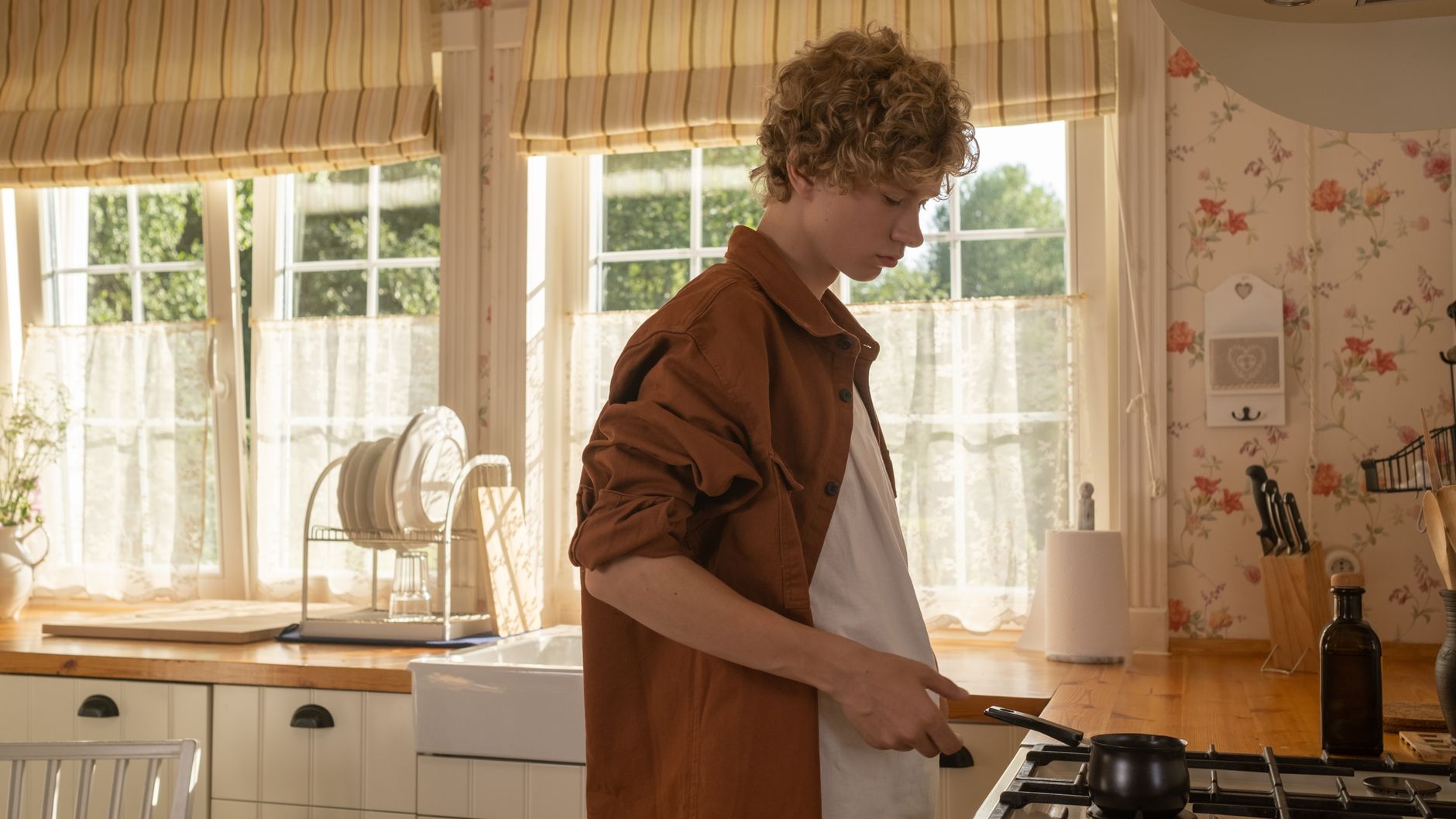
Why your child talks to their therapist but not to you

Based on Forta's webinar Practical Home Support: Turning Therapy Into Everyday Wins, presented by Juliet King, BCBA, on June 16, 2026.
Your child is talking in session. You can hear it from the next room. Then the session ends, the door closes behind the therapist, and the house goes back to how it was.
You're not imagining it, and it isn't that your child prefers them. What you're seeing has a name, a research literature going back to 1977, and a set of nine specific techniques for fixing it.
What's missing has a name, and so does the reason
Generalization is a skill showing up beyond the exact conditions it was taught in. It runs across people, from the therapist to you to a teacher to a grandparent. Across settings, from a session to the kitchen to a babysitter's house. And across situations, so a child taught to say "stop" when someone takes a toy also says it when someone pushes.
In 1977, two researchers reviewed everything published on the subject and sorted the approaches into nine categories. They gave the first and most common one a deliberately plain name: train and hope (Stokes and Baer, Journal of Applied Behavior Analysis).
Train and hope describes work where the possibility of generalization was recognized, whether it happened was noted, and no particular effort was made to cause it. Teach the skill. See if it turns up elsewhere. Hope.
If your child has a skill that hasn't left the therapy room, that's very likely what's quietly in effect. Not through anyone's negligence. It's the default when nobody has specified otherwise.
Here's the encouraging part. The other eight categories in that paper are things you do on purpose, most of them need no special setup, and several of them belong at home rather than in a clinic. Here they all are.
The nine strategies, named
- Train and hope. Teach it in one setting and hope it appears in another. No plan for the transfer. The most common approach, and the reason this post exists.
- Sequential modification. If it doesn't transfer, go and teach it in the second setting too. Then the third. It works, and it's honest about the cost, which is teaching the same skill more than once.
- Introduce to natural maintaining contingencies. Choose skills the ordinary world rewards on its own. A child who asks for a drink and gets a drink is being maintained by the world, not by a therapist. Those skills survive the end of therapy.
- Train sufficient exemplars. Practice across enough people, examples and places that the skill stops being tied to any one of them. A request made only to one therapist belongs to that therapist. Made to three people in four rooms, it starts to belong to your child.
- Train loosely. Vary the conditions on purpose instead of keeping everything identical. Different wording, different materials, different room. One study applied loose training to language skills and found the target language generalized to free play and continued over time (Journal of Applied Behavior Analysis).
- Vary rates of reinforcement. Make it unpredictable when a reward is coming. A child who only responds when the token board is visible has learned the board rather than the skill.
- Program common stimuli. Put something salient from the teaching setting into the setting where you want the skill. There's a picture of what this looks like further down.
- Mediate generalization. Give your child something portable that travels with them. A phrase they say to themselves, a card in a pocket, a picture on a phone. Something they carry rather than something an adult has to supply.
- Train to generalize. Treat generalizing as the thing worth rewarding. Notice the new application rather than the practiced one.
One of these runs against a reasonable intuition. Keeping conditions consistent helps a child learn a skill. Varying them, as in five, is what helps the skill travel. Both are true, in that order.
Why number three matters more than it looks
The most common reason a skill doesn't come home is unglamorous. It was reinforced in one place and not the other.
In a session, a child who asks for a break gets a break, immediately and reliably. At home the same request can go unnoticed in a chaotic afternoon. Not because anyone is indifferent, but because nobody flagged that this is the new skill and this is the moment it needs a response.
There's a second reason, and it's easy to miss because it's about us rather than about our kids. We tend not to reinforce behavior we regard as simply expected. Nobody praised us for doing our homework. You don't get congratulated for showing up to work, except that you do get paid, which is the part worth noticing. Adults are working inside a reinforcement arrangement so reliable it's become invisible.
A child learning something brand new doesn't have that history yet. The skill is effortful and it isn't automatic, and if it produces nothing at home, home isn't going to be where it shows up.
What number seven looks like in a living room
Take a teenager who can tidy up, but only if someone names every individual step. Pick that up. Move that. Straighten those. It works, and it's exhausting, and the adult is doing most of the thinking.
Now imagine arranging the couch exactly as it's meant to look, taking a photo of it, then messing it up and saying: make it look like the picture.
The photo goes on the wall beside the couch. It's a prompt that doesn't need a person standing there talking, and when the routine settles the photo comes down.
That's programming common stimuli (Stokes and Baer; see also a later study applying it to academic behavior). The same logic covers a photo of what's in the fridge, so a child can pick a snack without asking what there is. Or a short written sequence, so "did you do the list?" replaces four separate questions.
Choose prompts you'll be able to stop using
There's a principle underneath that photograph worth saying on its own.
Prompts run roughly from most to least intrusive: physical guidance, then spoken instruction, then visual supports, then nothing at all. Most families arrive at spoken instruction and stay there, because it works. You say what to do, your child does it.
The trouble is that a spoken prompt needs you present, paying attention, and repeating yourself indefinitely. It's the hardest kind to fade, because fading it means you say less while your child has nothing else to lean on.
A visual prompt is easier to remove. It sits on the wall, the child can use it independently, and eventually it comes off the wall. Picking prompts partly on the basis of how easily you'll be able to stop using them is one of the higher-return decisions available to you.
What to ask your BCBA
Which of the nine is in my child's plan right now? You have the vocabulary for this question now, and it's a better one than "how do we get this to happen at home."
What exactly is my child working on, at what level? Not the goal, the current target. If it's two-to-three-word requests, one-word requests at home are below where they are.
What would this strategy look like in my kitchen? Ask for the home version specifically, rather than the principle.
Which spoken prompt should we convert to a visual one first? You're asking them to pick, because the order matters and it's their call.
Who else should know what changed? Teachers, a babysitter, a grandparent. Ask which skills are ready to travel to other people.
What would tell you this is working? Their answer tells you what to watch for, which turns your afternoons into useful information rather than anxious ones.
What to do this week
Match the level. Once you know the current target, use it at home, at that level, in ordinary moments. That's most of the work and it costs nothing.
Reinforce the new skill deliberately, even when it feels unnecessary, and especially then. A brand-new skill needs a response for a while. It can be faded later, and it will be.
Tell the other adults what changed. A child who used one word in February might be working on three now, and anyone who hasn't been told will keep accepting one.
Add people and rooms on purpose. A sibling, a grandparent, a cousin. The kitchen, the car, the park. That's number four, and it needs no special setup.
Pick one spoken prompt and make it visual. The instruction you repeat most. One is enough to start.
Go to the parent sessions. This is the least exciting item on the list and it's the one that most often changes the outcome, because it's where the strategies get taught and where the skills your child is building find somewhere to land. If you want to see what one looks like before you commit an hour to it, the webinar this article draws on, Practical Home Support: Turning Therapy Into Everyday Wins, covers the couch photograph and the prompt-fading idea in more detail.
The thing worth holding onto
A good therapy team is trying to become unnecessary. What they're aiming at is a child who uses what they've learned with the people they live with, in the places they actually spend time, with no clinician in the room.
Skills that stay in the therapy room don't get your child there. Skills that travel do. And travel isn't something you wait for. It's something you build, starting with the next ordinary afternoon.
Frequently asked questions
Why does my child use skills with their therapist but not with me?
Because a skill taught in one setting does not automatically appear in others. Generalization across people, settings and situations has to be actively programmed. The most common reason a skill does not transfer home is that it is reinforced in the therapy setting and not at home, often because nobody identified which new skill needs a response.
What is generalization in ABA?
A skill appearing beyond the exact conditions it was taught in, along three dimensions: across people, across settings, and across situations. A skill that appears only with one person in one room is not yet doing the job it was taught to do.
What is "train and hope"?
In a 1977 review of the generalization literature, researchers sorted the approaches into nine categories and named the most common one "train and hope," meaning cases where generalization was recognized as possible and noted when it occurred, but no particular effort was made to cause it. It remains the default when nobody specifies otherwise.
What are the nine generalization strategies?
Train and hope, sequential modification, introduce to natural maintaining contingencies, train sufficient exemplars, train loosely, use indiscriminable contingencies, program common stimuli, mediate generalization, and train to generalize. They were identified by Stokes and Baer in a 1977 review published in the Journal of Applied Behavior Analysis.
What is programming common stimuli?
One of the nine strategies: deliberately introducing something salient from the teaching setting into the setting where the skill needs to appear. A photograph of a tidy couch placed beside that couch is a practical example.
Why use visual prompts instead of telling my child what to do?
Spoken prompts require an adult present and repeating themselves, which makes them the hardest kind to fade. A visual prompt does not depend on a person being there and can be removed once the routine is established. Choosing prompts based on how easily you can stop using them is a useful principle.
Does keeping practice consistent help or hurt?
Both, in order. Consistency helps a child acquire a skill. Deliberately varying conditions, including wording, materials, setting and people, is what helps the skill transfer, a strategy called training loosely. One study found loose training produced language generalization to a free-play setting that continued over time.
What should I ask my child's BCBA about generalization?
Which of the nine strategies is in the current plan, what the exact current target is and at what level, what the strategy would look like at home, which spoken prompt to convert to a visual one first, who else should be told what changed, and what evidence would show it is working.
Want therapy that happens where the skills need to work?
Forta delivers ABA therapy into your home, with parent coaching built into the plan rather than added on.
Forta provides Online ABA therapy in 47 states, and In-Home ABA therapy in select cities including Houston, TX.
Sources
- Stokes TF, Baer DM. "An implicit technology of generalization." Journal of Applied Behavior Analysis, 1977;10(2):349-367. Link
- "The Effects of Programming Common Stimuli for Enhancing Stimulus Generalization of Academic Behavior." Journal of Applied Behavior Analysis. Link
- "Programming 'loose training' as a strategy to facilitate language generalization." Journal of Applied Behavior Analysis. Link
About this article
Written by Will Africano, VP of Marketing · Clinically reviewed by Kimberly Sadovich, MA, BCBA · 2026-10-01
Based on Forta's webinar Practical Home Support: Turning Therapy Into Everyday Wins, presented by Juliet King, BCBA, on June 16, 2026.
What this is. General information, reviewed by a BCBA. It is not clinical advice about your child. What works for one child often does not work for another, and your child's BCBA is the person who can tell you which of this applies.


.jpeg)